
How do container depots cooperate with sea terminals?
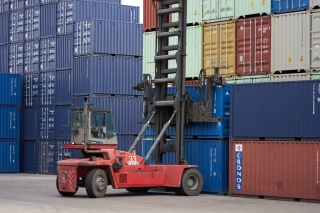
The high intensity of traffic in seaports and the dynamically growing number of sea containers handled by Polish terminals mean that deepwater terminals face the challenge of limited storage space. The solution to this bottleneck is close operational cooperation with container depots, which serve as the "lungs" of the logistics system, taking over the handling of empty units and technical processes.
Overcrowding of seaports directly impacts companies' finances – every day of delay in picking up or returning a container involves severe financial penalties (so-called demurrage and detention). This is precisely why container depots are crucial, as they act as additional reserve space. Thanks to them, it is possible to efficiently manage the movement of various units: from smaller 20-foot containers (20' DC), through large, 40-foot high-cube containers (40' HC), to specialized refrigerated units (Reefer).
The depot as the terminal's technical facility
Cooperation begins at the moment the container is released by the shipowner or cargo interest. The sea terminal, focused on vessel handling, strives to remove empty units from its yard as quickly as possible. This is where the role of the depot comes in, performing container gate-in operations.
Currently, the standard is full integration of EDI (Electronic Data Interchange) systems between the depot and the terminal, allowing for automatic transport pre-advice. Every unit arriving at the depot undergoes a rigorous technical inspection.
More developed container depots also offer their own terminal services, possessing an inland terminal with a railway siding. Such a solution enables full intermodality, i.e., combining different branches of transport (rail and road) within a single location. Thanks to its own terminal, the depot becomes not only a storage point but a strategic transshipment hub. This allows for efficient transport of containers from ports deep into the country by rail, which is key from the perspective of ecology (carbon footprint reduction) and delivery time optimization.
Key technical processes in the depot:
Safety standards and legal aspects
The exploitation of containers in the depot-terminal arrangement is subject to strict international standards. The legal basis is the CSC Convention (International Convention for Safe Containers) of 1972. Every container must have a valid CSC plate, which confirms its fitness for sea transport.
Depots are responsible for renewing certification under the ACEP scheme. Regarding environmental protection, they must meet standards for rainwater retention and the separation of petroleum-based substances during unit washing, as regulated by EU environmental directives implemented into Polish water law.
The role of modern container depots goes far beyond simple storage of empty units. Today, they constitute the foundation of supply chain stability, linking the technical facilities of sea terminals with flexible storage solutions for business. Thanks to full intermodality, rigorous CSC certification, and advanced repair services, depots have become a guarantor of operational fluidity and capital protection. For companies seeking security and savings, cooperation with a professional depot is a strategic investment that allows for effective resource management in the dynamically changing environment of global trade.