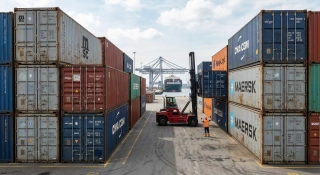
Maritime and land transport is currently carried out using shipping containers across the globe. Containerships traverse many nautical miles, and trucks cover hundreds of kilometers; observing this industry, one can notice both brand-new units and used container models. Is it therefore permissible to transport goods in used containers, and in which instances should this be avoided?
Container Classification: When is a "Used" Unit Roadworthy?
Not every used container is eligible for shipment by sea or transport via semi-trailer. The industry employs a clear classification based on technical condition:
One-way: Nearly new containers that have completed only a single journey from the factory (typically from China). They remain in pristine condition.
Cargo Worthy (CW): This is the most critical category. The container is used, but its technical condition allows for safe maritime transport. It holds a valid certificate of fitness for transport.
Wind & Watertight (WWT): These containers are wind- and water-sealed. They are ideal for stationary storage; however, without additional inspections, they may not be cleared for international transport.
As-is: Often damaged units decommissioned from service. They are unsuitable for the transport of goods but may serve as standalone private storage for items that are not sensitive to environmental changes.
The CSC Plate – The Container's "Registration Certificate"
For a used container to legally participate in international transport, it must possess a valid CSC plate (International Convention for Safe Containers). Without it, a container is merely a "metal box," and no carrier will accept it on board a ship, nor will any terminal allow it to be loaded. The plate was introduced under the 1972 Convention to standardize safety requirements in international transport.
The plate is mounted on the left door of the container and contains key technical parameters:
Identification Number: A unique number assigned by the manufacturer.
Date of Manufacture: The month and year the container left the factory.
Maximum Gross Mass: The maximum weight of the container including the cargo.
Stacking Strength: Information regarding the weight that can be placed on top of that specific unit.
Transverse Racking Test Value: Resistance to forces acting on the container during the rolling of a vessel.
Country of Approval and Certificate Reference Number.
When containers are loaded onto massive vessels, they are stacked on top of one another—up to 10 tiers high. If any container had a structural defect, the entire column could collapse. The CSC plate is a guarantee that the construction is stable, dimensions comply with ISO standards, and the container will not buckle under the weight of others.
Note: If you are purchasing a container for stationary storage or modification, the CSC plate is of no concern. However, if you plan to ship goods in it, the plate must be valid and legible.
Advantages and Disadvantages of Used Containers
The decision to purchase or lease a used shipping container is primarily a choice between cost-efficiency and aesthetics. These units are designed to withstand extreme maritime conditions for 15–25 years, meaning even a decade-old unit still has a "second life" ahead.
The main advantages of used containers include:
Low Price: This is the primary argument. A used container can be 30% to 50% cheaper than a brand-new One-Way unit.
High Durability: Even used containers are made of Corteen steel, which is resistant to atmospheric corrosion. Despite surface rust, the structure remains exceptionally solid for years.
Immediate Availability: Large ports and terminals have yards full of used units. There is no need to wait for delivery from a factory in China.
Ecology and Upcycling: Utilizing a used container aligns with the "less waste" philosophy. Instead of smelting the steel, you give it a new life as a warehouse, workshop, or architectural element.
Ideal for Modification: If you plan to cut openings for windows and doors or weld additional elements, it is better to do so on a unit that has already seen several years of service.
On the other hand, used containers also have disadvantages:
Appearance: Dents, scratches, rust, and visible signs of wear. They are often not visually appealing.
Uncertain Transport History: One can never be 100% certain what was previously transported inside. If chemical or toxic substances were involved, odors may be difficult to eliminate.
Sealing: Before a used container enters transport, its integrity must be verified, as years of service may affect its tightness.
Maintenance Costs: Older units may incur frequent maintenance costs depending on their operational state.
Risk of CSC Certificate Expiry: Not every used container has a valid CSC plate. If you plan to send it on a long-distance sea route, you must account for the costs of recertification.
Goods Not to Be Transported in Used Containers
While used containers are excellent for transport in many respects, certain categories of goods should never be placed in used units due to their specific nature.
High-risk goods include:
Food and Pharmaceuticals: There is a risk of odor contamination and chemical absorption. Cleaning containers with strong chemicals does not guarantee that these agents will not penetrate food or medical products. In this case, consumer health is the highest priority.
Textiles and Luxury Goods: A worn-out container often smells of mustiness, sea salt, or oil. Removing such odors from clothing and fabrics is virtually impossible. Additionally, an inadequately cleaned container may damage luxury goods.
Electronics: Used containers may have inferior thermal insulation and sometimes suffer from "container rain" (condensation forming on the ceiling). Electronic equipment can be damaged under such conditions during transit.
Goods Requiring Sterile Conditions: Cosmetics, children's toys, and medical equipment require consistently clean environments.
Safe Cargo Transit – Technical Inspection of the Container
Before loading cargo into a used container, perform a technical inspection. Carry out the following simple tests:
Light Test: Enter the container and close the doors. If you see any points of light, the container is not watertight.
Floor Condition: Check if the floorboards are rotted, heavily stained with oil, or if there are protruding nails that could damage your cargo.
Door Mechanism: Ensure the locking bars operate smoothly. Gaskets must be flexible and adhere tightly along the entire perimeter.
Absence of Odors: Containers used for chemicals may retain a permanent "scent," disqualifying them for the transport of food or textiles.
The utilization of used containers in transport constitutes not only an economically viable business activity but also substantive support for the concept of sustainable development. Due to their robust construction, these units are capable of providing safe service for decades, provided that certification and tightness standards are strictly adhered to. Prior to selecting a specific model, it shall be ensured that the specific nature of the cargo is compatible with the capabilities of the given unit. Please be advised that even the most cost-effective purchase shall not compensate for losses arising from the disregard of the technical issues of a given container. By investing in verified, used containers, the purchaser grants them a second life, thereby gaining a reliable partner in international trade.